They Bought a Nova Scotia Lakehouse from the US Before They'd Ever Been There
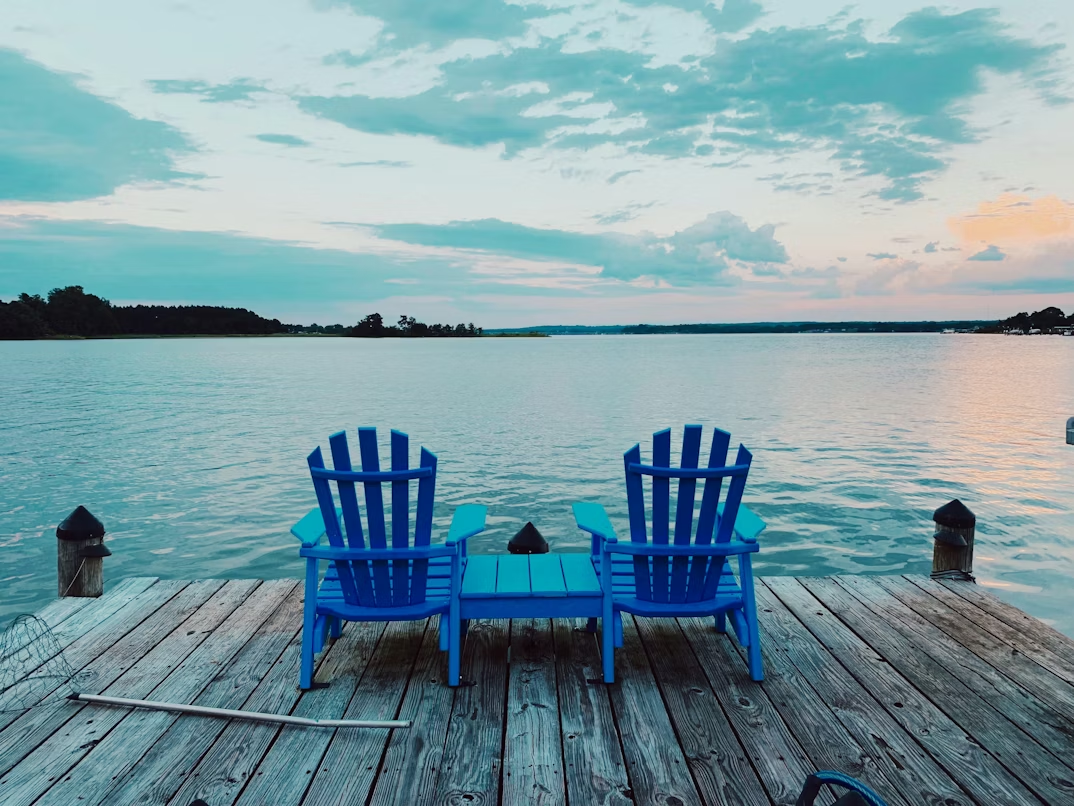
For a lot of Americans watching the last couple of years unfold, Canada started as a thought experiment. What if things got worse? What if we actually left?
For Zach and Melissa, that thought experiment became a research project. And the research project became a lakehouse in Nova Scotia they'd never set foot on before they bought it.
It started as an escape. It became something else.
Like a lot of people south of the border, they had been watching the political climate in the United States with growing unease. When birthright citizenship legislation passed, the idea of Canada shifted from background thought to active consideration.
They spent months researching different parts of the country. Went back and forth about whether they wanted a small vacation property, somewhere to go just in case, or whether they actually wanted to move. The political ups and downs kept them waffling. Every time things seemed to stabilize, something else happened.
But somewhere in the research, something shifted.
"We started to feel excited about Nova Scotia not just as an escape, but as a possible next adventure in our life," Zach told me. "We really liked the idea of scaling down and being somewhere beautiful with a focus on nature. The pace of living seems different and less intense, and that was appealing."
They weren't running from something anymore. They were moving toward something. Those are different decisions and they lead to different outcomes.
Ocean or lake. And why they chose elevation.
Zach had initially wanted to be on the ocean. But climate anxiety that had shaped their thinking about the US was shaping their property search too.
"We were concerned about the fallout from climate change and increased flood and storm risk," he said. "So I started looking at lake properties and was trying to figure out the best options in terms of flood zones."
What they found was a house right on a lake but two storeys up from the water. Mature trees on all sides. Elevated enough that the hurricane risk felt manageable. Close enough to the ocean to visit but not exposed to it.
It was a specific and considered decision. Not just lake versus ocean, but elevation, tree cover, proximity to the coast without vulnerability to it. For people moving from a country where climate-driven disasters have become routine, that kind of thinking isn't overcautious. It's just practical.
The wire transfer, the fish signs and the yardwork before closing
They had planned a trip in mid-April to explore Nova Scotia, New Brunswick and Ontario. See some houses. Get a feel for different areas. But a listing came up that felt right and they jumped on it.
Sight unseen. From the United States. On a lake they'd never stood beside.
Their first night in Nova Scotia was in Mahone Bay, the evening before closing. They walked around, got a feel for the area and went to bed ready to sign the next morning.
The wire transfer didn't go through.
"We had some good seafood," Zach said. "And just generally strolled around."
They went to Halifax. They went to Lunenburg. They found the metal fish signs, the painted wooden fish that line the streets in dozens of variations, and made a point of seeing every version they came across.
Three days later, still waiting, they drove up to the property and started doing yardwork. Hung a hammock. Walked the land. They didn't own it yet but it already felt like theirs.
The wire transfer went through the next day.
"We weren't really sure what to expect from the property itself since it can be really hard to get a feel for that virtually," Zach said. "And we absolutely loved it."
It was supposed to be cloudy all week. Instead it cleared two nights in a row. Sunsets and stars over a lake in Nova Scotia, in a place they'd found on a screen six months earlier from the other side of a border.
"We just felt really at peace there. We were really sad when we left."
The water system, the buckets and the first night fixing leaks
The lake had been frozen at the time of their inspection. That meant the water system couldn't be tested.
They knew this going in. They were mentally prepared for something to surface.
What surfaced was a water system issue with the intake pipe, the kind of problem that catches a lot of rural newcomers off guard, along with a sink and toilet that both leaked heavily on arrival. They spent their first night fixing them.
"That felt good," Zach said. "We really enjoy tending our spaces."
They hauled buckets. Picked up large water jugs. Figured out a plan to get it properly sorted on their next visit.
It is worth saying plainly: this is not a horror story. It is a rural homeownership story. The difference is preparation and mindset. They came in with their eyes open, some prior experience with rural living and a genuine appetite for the work that comes with a place like this. The leaks were an inconvenience. The hammock was still in the tree.
No neighbours yet. But the community found them anyway.
The area is seasonal. When they arrived, the houses around them were empty. No lights visible at night. No one to introduce themselves to.
But within days, people with cabins on the same lake had found them through online groups and reached out. Friendly messages. Looking forward to meeting when the season opens.
"The folks online in these forums have been incredibly generous when sharing information," Zach said. "It has made us feel a lot more prepared for the good and the bad."
This is something that comes up again and again in the community I run: the formal infrastructure of rural Nova Scotia, including healthcare access, trades, and services, can be genuinely stretched. The informal infrastructure of neighbours and online communities fills gaps in ways that are harder to quantify but just as real.
What they're thinking about next
They have a realtor coming to look at their US house. They're considering a full move.
The thing giving them pause isn't Nova Scotia. It's a close-knit friend group back home, neighbours they've deliberately built a life alongside, houses bought next door to each other. The kind of community that takes years to build and can't be replicated quickly anywhere else.
"The idea of leaving that seems sort of crazy," Zach said. "But we also just feel a very strong pull to be somewhere quiet."
They're also aware of what they have that makes this possible: no kids, remote work, a flexible life. They know that makes the decision different from what it would be for most people.
For anyone in a similar position, watching from the edges, letting themselves imagine it but not quite committing, Zach's advice is simple.
"This wasn't even a consideration for us a year ago. Once we really let ourselves be open to the idea it felt like it all moved very quickly and just clicked into place. We were not anticipating buying a house quickly but the place where we landed just felt like exactly where we were meant to be."
"Let it come to you."
If you're in the research stage and trying to figure out whether Nova Scotia is the right move, the Nova Scotia Relocation Decision Workbook is built for exactly this stage. Ninety pages of structured questions, financial reality checks and community profiles built from real data. No surprises withheld.