Lake vs. Ocean: What Nobody Tells You Before You Buy in Nova Scotia
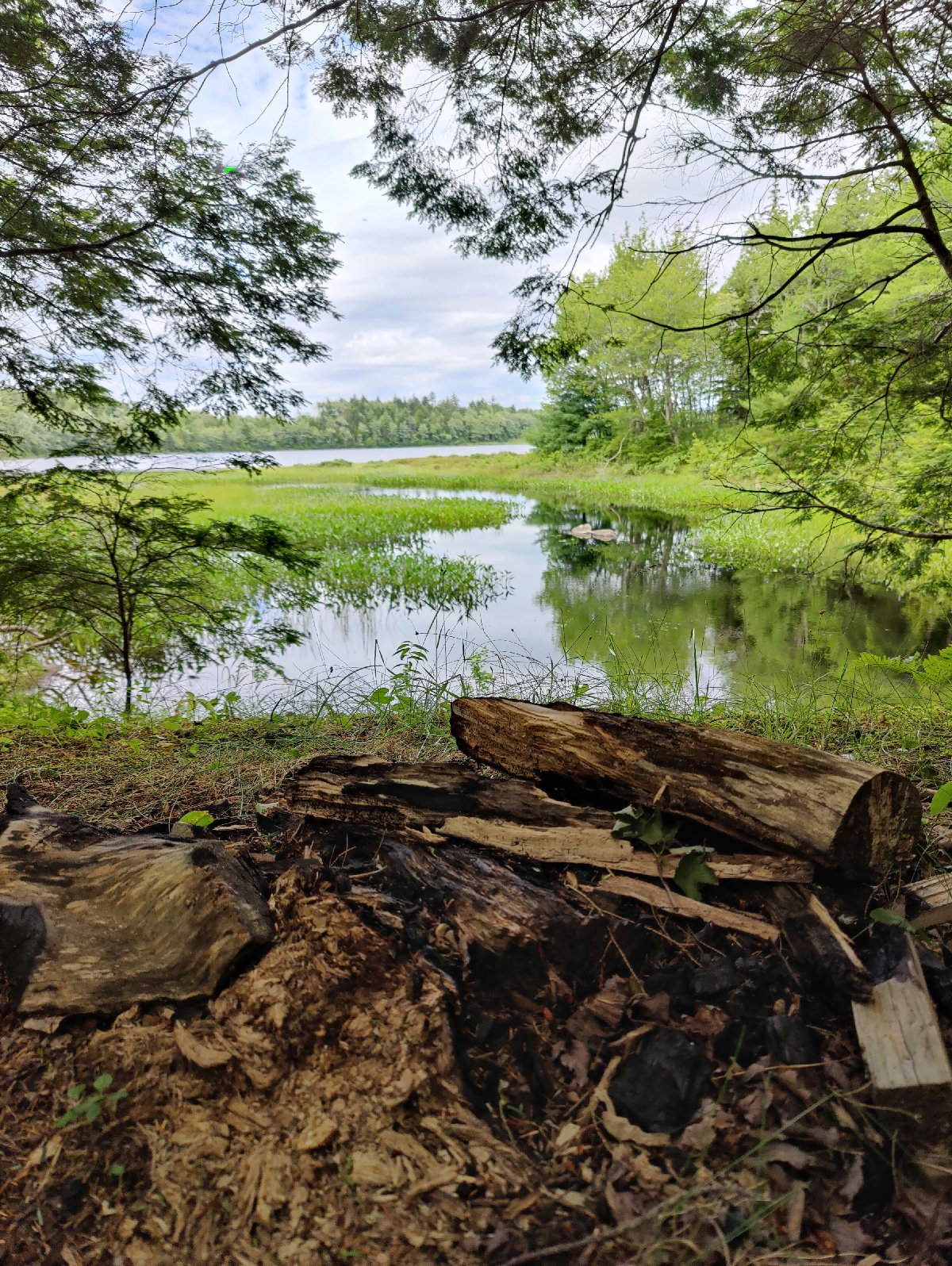
When we were deciding where to land in Nova Scotia, the lake felt like the obvious choice. We'd grown up with the Ontario cottage country version of lake life in our heads: calm water, warm summer swims, kayaks at dusk, that particular stillness that only exists on a freshwater lake on a hot July evening.
What I didn't know then, and know well now, is that Nova Scotia has somewhere around 3,000 lakes. And they are not the same lake.
Some are deep and cold and clear. Some are shallow and weedy and better suited to frogs than swimmers. Some are spring-fed, some are fed by rivers, some are connected to the sea in ways that make them brackish and warm and something else entirely. Some freeze hard enough to skate on in January. Some, like mine, don't freeze reliably at all. Some sit right behind the house with a dock you can walk to in bare feet. Some are set back far enough that getting there in summer means walking through the kind of bug situation that makes you reconsider the whole plan.
We bought on a lake in Clare. It's beautiful. It is also spring-fed, shallow, set back from the house and surrounded by enthusiastic insects from May through August. It is not the Muskoka lake I had in my head.
One more thing worth mentioning for people picturing a sandy shoreline and a gentle wade-in: most lakes on the southwest side of the province are rocky. Not a little rocky. Rocks all the way down. Some properties have had sand brought in but that's the exception. If a sandy lake bottom is part of your vision, ask specifically before you fall in love with a listing.
I'm not saying I regret it. I'm saying the decision of lake versus ocean in Nova Scotia is more nuanced than it looks from the listing photos and the first thing worth knowing is that "a lake property" can mean almost anything.
The Lake Reality Nobody Prepares You For
Our lake in Clare is spring-fed. Beautiful, actually. Spring-fed means cold and cold means it doesn't freeze reliably in winter. Which sounds fine until you realize it also means no skating. The Muskoka fantasy includes skating. This lake does not.
It's also set back from the house, which seemed like a nice detail in the listing. What it means in practice is that getting to the water in summer requires walking through the kind of bug situation that makes you question your life choices. Blackflies. Mosquitoes. The particular enthusiasm of insects near standing water in a Nova Scotia summer. We don't use the lake much in July and August. The bugs won't let us.
The lake is also shallow. Shallow enough that it's not really a swimming lake. It's a looking-at-lake. Which is genuinely lovely. But it's not what we pictured.
I'm not saying we regret it. I'm saying if you are holding an image of Ontario cottage country in your head while you browse Nova Scotia lake properties, you should know that image may not survive contact with the actual water.
The Ocean Reality Nobody Prepares You For
Let me be honest about something: I run cold. I am a sweater-in-July person. So take my ocean experience with that in mind.
The Atlantic in southwest Nova Scotia is cold. Not cold like a shock and then you're fine. Cold like genuinely, consistently, refreshingly cold for most of the year. My daughter doesn't feel it. She's in without hesitation and stays until we drag her out. For people who run hot, who find Ontario summers suffocating, who have always wanted to swim in water that actually cools you down: this ocean is for you.
For the rest of us, the swimming window is roughly the heat wave at the end of July and maybe a stretch into August. Outside of that it's a view, not a swim. A beautiful, dramatic, endlessly interesting view. You're just watching it from the shore in a fleece.
The ocean is also loud and sensory in a way that surprises people. It is rarely still. The wind is real and constant on the southwest coast and the sound of it becomes the background of your life. Some people find that grounding. Some find it relentless. Most people find it both, depending on the day.
Sand bugs show up near the water's edge on some southwest beaches in warm weather. Small biting insects worth knowing about before you plan a long afternoon on the sand.
The north shore runs warmer. The Minas Basin and Northumberland Strait are genuinely swimmable for a longer season than the Atlantic side. If warm ocean swimming is central to your vision, where you land in the province matters enormously.
What the Ocean Does Give You
Salt air and sea breeze are not nothing. One of the consistent things people who live oceanfront tell you is that the bugs are manageable in a way that lakefront living often isn't. The same wind that makes the ocean loud keeps the insects moving. It's a real trade-off.
The views are different too. The ocean changes constantly: light, colour, mood, tide. It is never the same twice. People who live on it describe a kind of relationship with it that's hard to articulate until you've experienced it yourself. A lake is beautiful. The ocean is alive.
Salt air does things to your house, though. Paint, metal, wood. Everything weathers faster on the coast. Factor that into your maintenance expectations and your budget.
If You Want to Actually Use the Water
This is the section that doesn't get written often enough. A lot of people choosing between lake and ocean aren't just thinking about the view. They're thinking about a small boat, a kayak, a fishing rod, a paddle board. That changes the decision considerably.
On the ocean, the window for small boat use is real but narrow. The water does go calm. Early mornings in summer, before the wind picks up around 10am, the surface can be glassy and genuinely beautiful. People who paddle board and kayak on the South Shore describe timing their mornings around exactly that window. It works. It just requires planning around the conditions rather than walking out whenever you feel like it.
A small open boat on the ocean is doable but location matters enormously. A 14-foot outboard in a protected bay like St. Mary's Bay is a different experience from the same boat on open Atlantic water. People who fish close to shore in sheltered areas do it regularly and happily. People who venture out past the protection of a bay in a small boat are at the mercy of conditions that can change faster than expected. If serious ocean fishing or boating is part of the vision, talk to people who actually do it in the specific area you're considering. Not just the general coastline.
Freshwater lake fishing is a different experience altogether. Quieter, more predictable, no tide, no swell. If you grew up fishing Ontario lakes, a Nova Scotia lake will feel familiar in a way the ocean won't. The Bras d'Or in Cape Breton is worth singling out here. Brackish water means a genuinely different mix of species than a landlocked lake and people who fish it describe it as its own category.
One thing we learned the harder way: a boat is another motor. We had a small 14-footer for a time and it was lovely when it was running well. It was also one more thing on a list that already included a truck, a tractor, ATVs, a wood splitter and a chainsaw. Rural life comes with equipment and equipment comes with maintenance. If you're a boat person, someone who genuinely enjoys the mechanical side of it or has the skills, a small boat makes complete sense. If you're imagining easy weekend use with minimal upkeep, factor in the reality of what owning a motor on the water actually involves before it becomes part of your property decision.
A kayak sidesteps most of that. No motor, no winterizing, no fuel. Early morning on calm water in a kayak is one of the genuinely good things about living near water in Nova Scotia, lake or ocean. It just has to be early.
The Thing People Forget
You are almost never far from the ocean in Nova Scotia. The province is small enough and the coastline long enough that even if you buy on a lake inland, the ocean is usually a reasonable drive away. You can have the quiet lake morning and the ocean afternoon. You can have both.
A few members of our community put it simply: buy on the lake for living, visit the ocean for the experience. The lake gives you calm water for kayaking, warmer swimming, skating if it freezes properly, fewer weather surprises and usually lower maintenance. The ocean gives you the view, the drama, the salt air and the feeling of somewhere bigger than you.
The Bras d'Or Lake in Cape Breton is worth a separate mention. It's brackish, connected to the sea and warm enough to swim in. It feels like neither a typical freshwater lake nor the open Atlantic. People who land there often describe it as the best of both and the fishing is genuinely different from a landlocked freshwater lake.
The Honest Version of the Decision
If you grew up with Ontario lake life and you're chasing that feeling, be honest with yourself about what that feeling actually requires. Warm water. Calm conditions. A lake deep enough and clean enough to swim in. Those exist in Nova Scotia but they're not universal and you won't know which category your specific lake falls into without asking very specific questions.
If you're drawn to the ocean for the view and the lifestyle but you're worried about swimming and kayaking, look at protected bays and coves rather than open Atlantic exposure. The experience of oceanfront living in a sheltered cove is genuinely different from a fully exposed coastline.
If you're not sure, which is a completely reasonable place to be, remember that in Nova Scotia you're rarely choosing between having one and never seeing the other. You're mostly choosing which one you wake up to.
That's a good problem to have.
Still working through the Nova Scotia decision? The Nova Scotia Relocation Decision Workbook covers the location questions worth asking before you commit, built from real community data from people who've already made the move.