What Nova Scotia Offers That Young People Don't Always See Coming
This post gets written a lot as a retirement story. Older couple, equity from the Ontario house, slower pace, nature walks on weekends. That version of the Nova Scotia move is real and it's well documented.
It's not the whole picture. There are people who arrived in their 30s, moved with young kids or came here mid-career with a remote job. They had a vague sense that something needed to change and often describe a version of this place that gets overlooked in the conversation.
Here's what they didn't expect — or maybe they did, but just weren't sure how much.
Outdoor Access as a Lifestyle Reset
People talk about Nova Scotia's nature the way you'd describe a nice park near your house. When you live here, the park is your house. Or very close to. Way closer than before. Personally, coming from Ontario, the kind of nature my kids get in my backyard is the kind of nature we had to pay parking fees for back home.
There's also the scale of it. AllTrails alone lists over 1,350 hiking trails, mountain biking routes, and backpacking trips across the province. Nova Scotia has more than 70 protected wilderness areas under provincial legislation. There are over 7,600 kilometres of coastline. Cape Breton Highlands National Park has 45 hiking trails. Kejimkujik is a certified Dark Sky Preserve with 24 more.
That's not a weekend destination. That's the texture of daily life if you choose to let it be.
The research on what this does to people is now fairly well established. Across 39 reviewed studies, 92% demonstrated consistent improvements in health outcomes when individuals engaged with natural outdoor environments, with mental health outcomes improving in 98% of studies. A large UK survey found that people who spent at least two hours a week in nature were significantly more likely to describe their health and wellbeing positively than those who spent none.
In a city, getting two hours of quality nature on a weekday requires planning. Here, it often just requires going outside. When we came with our young children, we wanted to grow our own food. Just walking to the barn and greenhouse to water and feed things all spring, summer and fall normally adds up to 10k steps a day alone. We don't even think about it.
The Entrepreneurial Gap
Nova Scotia has the most small employer businesses of any Atlantic province but it also has among the fewest businesses per capita in Canada. Nova Scotia has 28.4 small businesses per thousand adults, compared to 37.7 in Alberta and 37.5 in British Columbia.
That number cuts two ways. It reflects a real economic gap and it also reflects an opportunity gap that people from more saturated markets sometimes notice immediately.
The restaurant that doesn't exist yet. The service nobody has thought to offer. The niche that would be carved up into irrelevance in Toronto but has room to breathe here. Lower commercial rents, lower cost of living, a population that tends to support local with genuine loyalty. Futurpreneur has helped launch more than 650 new businesses in Nova Scotia and provided over $16.5 million in collateral-free loan capital to young entrepreneurs in the province.
None of that guarantees success. The income challenge is real, the market is smaller and the risks of small business anywhere are the same here. But the gap between idea and execution is genuinely shorter in a smaller place. People who moved from competitive urban markets often describe feeling like they could finally be heard. When a new business opens up in Clare, everyone knows and everyone goes. In a giant small town province like Nova Scotia, the word definitely gets around. This works in favor of the young entrepreneurs.
Community as an Asset
In a city, your professional network is a spreadsheet. In a small province, it's the person you sat next to at a community dinner, whose cousin runs the agency you want to pitch, who already knows your name because your neighbour mentioned you.
This isn't nepotism, exactly, though it can shade into it. It's the reality of how small communities function. Relationships move faster than resumes. Trust transfers through proximity. Showing up consistently, being known as someone who does what they say, matters more here than a polished LinkedIn profile. That's not to say we didn't see that in the city business communities back home. In places like Guelph and Kitchener Waterloo it can be similar but it just lands different here.
For people who are good at their work but not naturally good at self-promotion, this is often a quiet revelation. The work speaks for itself in ways it couldn't when you were one of thousands doing the same thing. You stand out more.
Time
This one is hard to quantify, which is probably why it doesn't get mentioned enough.
Time in Nova Scotia isn't just shorter commutes, though that's real too. It's something more cultural than logistical. The province moves at a pace that treats time differently than most of urban Ontario does. Family comes first here in a way that's understood, not negotiated. Wellbeing isn't a trend or a calendar item. It's just how things are organized.
The commute that was forty-five minutes is now twelve, and there's no traffic to sit in either way. Many communities have worked to keep services local so that daily life doesn't require driving an hour to accomplish the basics. Less time lost to logistics means more time that's actually yours.
What fills that time might surprise people coming from cities built around entertainment infrastructure. There are fewer restaurants, fewer venues, fewer things competing for your Friday night. What replaces them, for a lot of people, is each other. The kitchen party isn't a Nova Scotia tourism tagline. It's a genuine cultural reflex, the province's answer to the question of what you do when the entertainment isn't provided for you. You make it yourself, at home, with people you know.
People who've been here a while describe this as the thing they most underestimated before they moved and the thing they'd most resist giving up. Not the scenery, not the cost of living. The feeling that they got their life back in small increments, and that nobody here thought that was unusual.
Time is the one resource you can't earn more of. Nova Scotia, it turns out, is quietly structured around protecting it.
Raising Kids Differently
The parenting conversation about Nova Scotia usually focuses on risk: healthcare access, school quality, proximity to family. All real. All worth thinking through carefully.
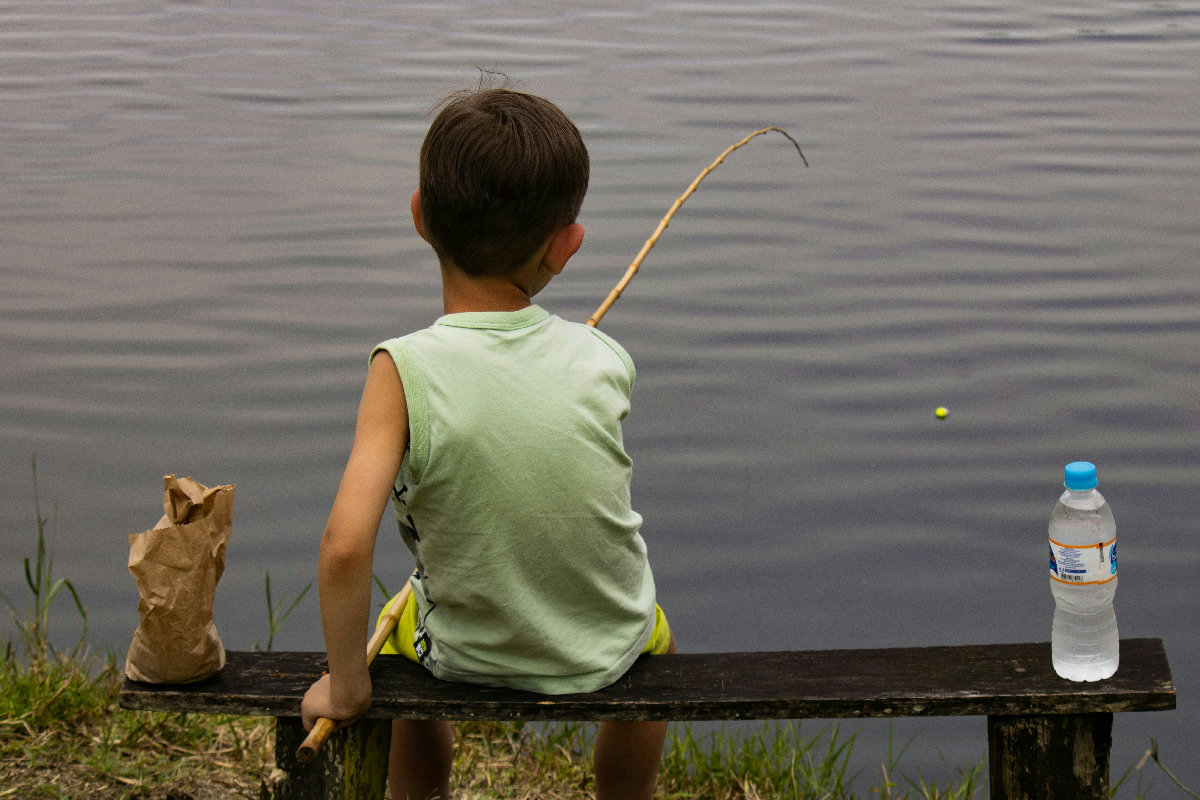
What gets less airtime is what childhood here can actually look like. Kids who walk to school without being driven. Backyards that back onto fields or water. Neighbourhoods where other kids appear, on bikes, unscheduled, the way that used to be normal. A pace of extracurricular life that leaves room for boredom, which turns out to be where creativity lives.
None of this is guaranteed by simply moving to Nova Scotia. It depends heavily on where you land and how you approach it. However, the conditions for a different kind of childhood exist here in a way that's harder to manufacture in a dense suburb of a major city, regardless of income.
The Identity Piece
This is the hardest one to say without sounding cliche, but people keep describing it, so it's worth naming.
A lot of the people who moved here in their 30s and 40s describe discovering something about themselves that the pace of city life had been quietly burying. Not dramatically. Not a conversion experience. Just a gradual realization that they'd been performing a version of themselves calibrated to a place that no longer fit.
Part of what drives that performance is the environment you're in. Ontario runs on a particular kind of social currency. Work titles, square footage, the right neighbourhood, the right car. Everyone around you is doing the same calculus, often while quietly drowning in it. One bad accident, one layoff, one unexpected bill away from the whole thing unraveling. The Joneses aren't ahead of you. They're just better at hiding the same anxiety.
Nova Scotia, particularly rural Nova Scotia, runs a different ledger entirely. Nobody asks what you do for a living when they meet you. They ask what your hobbies are. They want to know how you got your garden to look like that. The flex here is the size of your tomatoes, not your portfolio.
What that shift does to a person is harder to predict than it sounds. You start letting the house be a little messier when people come over, and then you notice you stopped caring. You get comfortable with neighbours dropping in unannounced because that's just what neighbours do here. You don't care if you look like you just came from feeding the chickens or hiking in the woods. Because you probably did.
Some people start things here they'd been putting off for years. Some people stop doing things they realize they never actually wanted to do. Some people just become less tightly wound, which turns out to have downstream effects on their relationships, their work and how they move through a day.
The research on this is hard to separate from the broader nature and community literature. But the community keeps offering the same observation unprompted: something about the scale of this place, and what it stops asking of you, creates conditions where people find out who they actually are.
That's not nothing. For the right person, at the right time, it might be everything.
The Honest Caveat
None of this is universal and some of it requires real trade-offs to access. The income gap is real. The infrastructure gaps are real. Healthcare, in particular, requires honest research before you rely on it. These posts exist precisely because sugarcoating the move is how regret gets built.
But the picture that gets painted of Nova Scotia as a place where young people go to stagnate is incomplete. It's also a place where people have built businesses, raised kids who remember their childhoods, made careers out of knowing the right people at the right time, and found two hours on a Tuesday afternoon to be outside in a way that never once required a reservation.
Whether that trade is worth it depends on what you're trading away. That's a question only you can answer. But it's worth knowing the full picture before you decide.